
The TAK Transcription and Automated Language Kit (TAK TALK) enables voice communications in critical environments and for multilingual situations. When utilized with mesh networking, TAK TALK empowers teams to function in cases both with an overloaded network and even with no existing network.
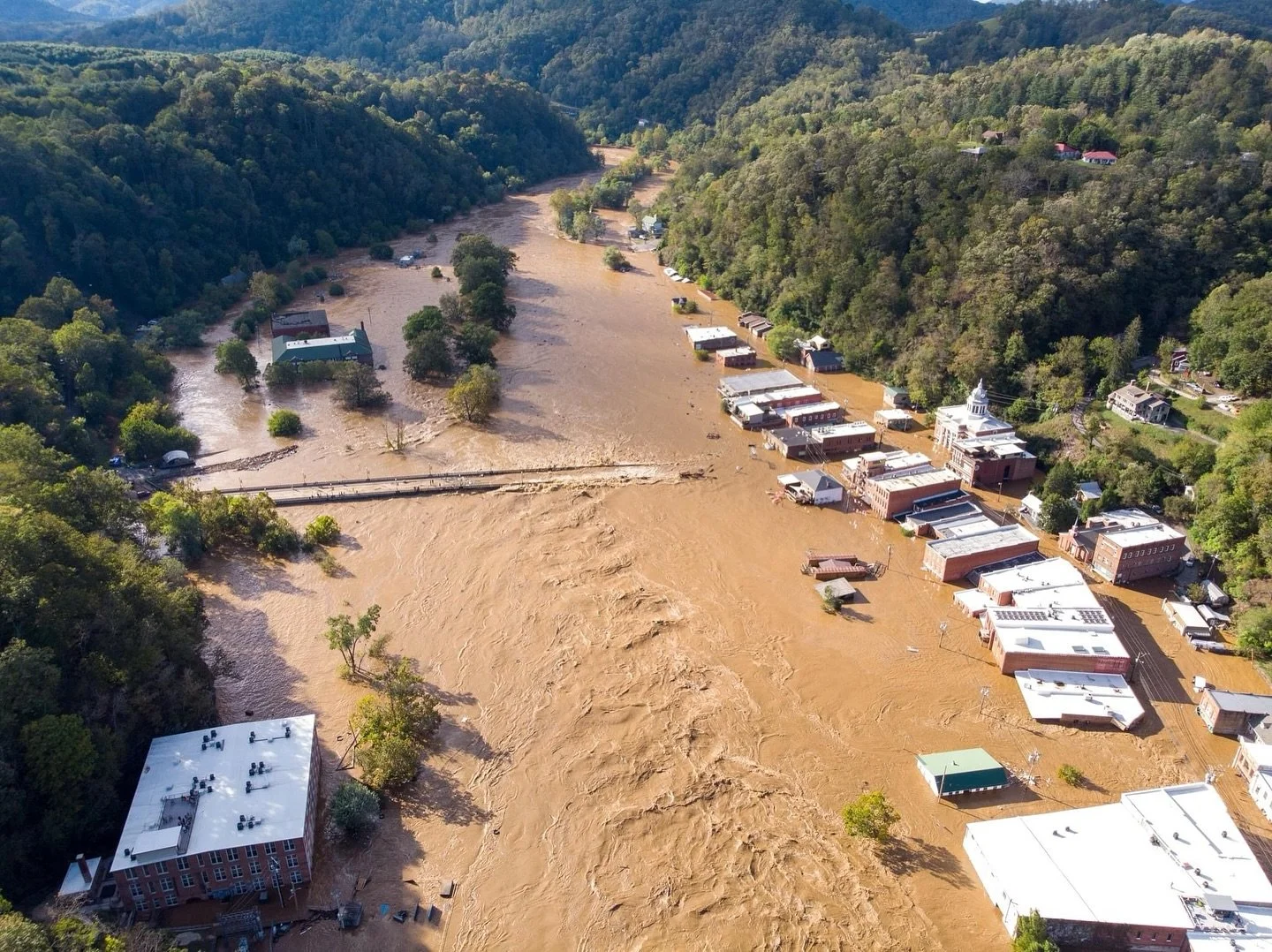
NC Department of Transportation (NCDOT), via NC State Climate Office, “Rapid Reaction: Historic Flooding Follows Helene in Western NC,” September 30, 2024. Source.
TAK TALK for When There is No Existing Network
Search and rescue (SAR) and disaster recovery give paramount need for voice communications, and operators need to be equipped with the technology to handle any circumstance, even where cell coverage is limited and communications options are few. While radio is a fallback, “dead zones” still persist and searchers often already have their hands and eyes occupied.
During Hurricane Helene in 2024, the FCC reported nearly 75 percent of cell sites in North Carolina’s disaster area were out of service during a critical day for rescue and response.
A mesh network like PERSEUS lets each team member’s device relay for the others, so coverage extends as the team spreads out. TAK TALK allows for low-bandwidth voice and text that can travel on mesh-networks without any tower. With TAK TALK and PERSEUS in tandem, local coordination starts immediately, and no time is lost waiting for the cell network to be repaired.
TAK TALK for Overloaded Existing Networks
Next, TAK TALK allows for security staff, and incident commanders and responders to make decisions quickly over voice, even if existing networks are overloaded.
Event Security
Fans used 52.3 terabytes on a single carrier’s network in and around the stadium at Super Bowl LVIII in 2024. Network vendors also describe a specific risk: on a shared radio network, event attendees can theoretically block radio access for public safety users such as police officers and first aid personnel during a traffic surge.
Security staff need to report and respond within seconds, in a crowd, and with their hands free. By utilizing a separate low-bandwidth mesh network and TAK TALK, a small, dependable channel is kept for the team that does not compete with the crowd’s traffic.
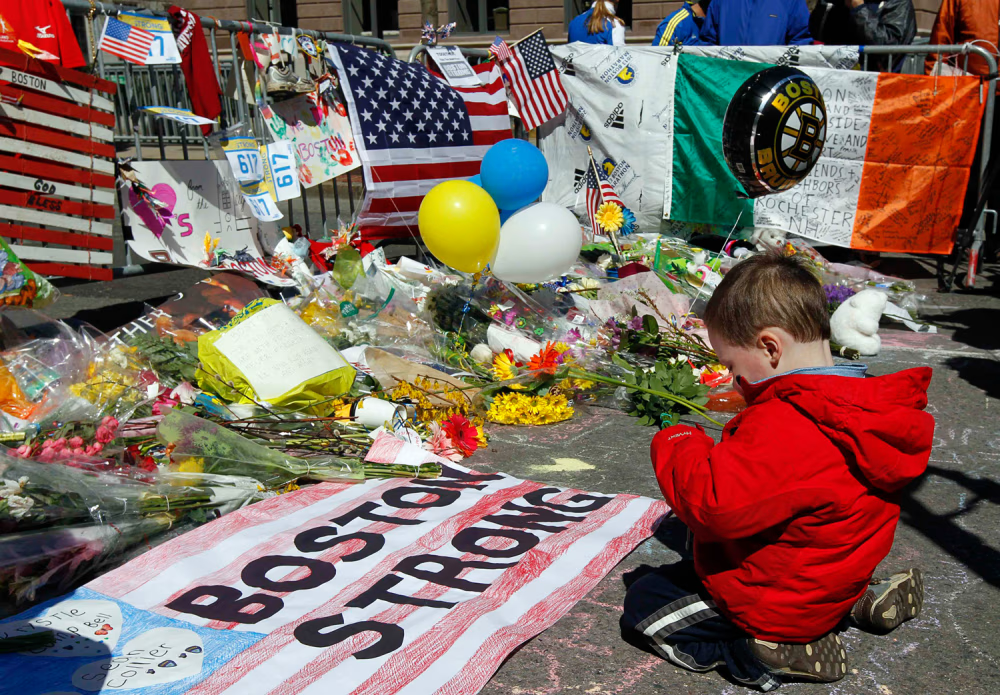
Bourg, J. (2013, April 21). Two-year-old Wesley Brillant of Natick, Massachusetts, kneels in front of a memorial to the victims of the Boston Marathon bombings near the scene of the blasts on Boylston Street in Boston, Massachusetts. Reuters.
Major Emergency
During a disaster, networks are saturated by large volumes of people trying to reach each other at the same moment. In a major emergency such as the 2013 Boston Marathon bombing, Verizon, AT&T, and Sprint confirmed to ABC News that service was available while their networks handled heavy call and data volume. AT&T told customers in the area to expect disruptions due to a spike in network activity and congestion, and advised them to use text messaging and keep non-emergency calls to a minimum.
During a network surge like this, incident commanders and responders have to coordinate resources and make decisions. Mesh networking and TAK TALK allow responders to keep a working channel for command and coordination while the public network is saturated.
TAK TALK for Multilingual Teams
Finally, translation is useful on any network, and it becomes more demanding on a mesh because translated voice has to fit a very small bandwidth budget.
That constraint shapes how TAK TALK handles the problem. Instead of sending recorded audio, the approach converts speech to text, translates the text on deivce, and converts it back to speech for the person receiving it. This uses recent open-source advances in multilingual speech-to-text, machine translation, and realistic text-to-speech, running inside the TAK ecosystem. Text takes a small fraction of the data that audio does, which is what makes near-real-time multilingual voice practical on resource-constrained networks such as LoRa.
Humanitarian Efforts
Humanitarian emergencies are almost always multilingual, and people displaced by conflict or disaster may share no language with the host community. Translators without Borders reports that local staff often carry “the burden of multilingual communication with little or no support.”
Using TAK TALK, a responder can speak in their own language and a teammate can hear the message in theirs, without waiting for a bilingual colleague to be nearby. Because the translation works on text, the exchange also fits the mesh networks that teams often rely on in disaster zones where no network exists.
Voice communications remain one of the most effective ways to convey critical information, and it matters most in the situations where networks fall short. After a major storm, the network may be largely gone. During a large event or emergency, it may be up but saturated. In humanitarian response, it may work and still leave teammates without a shared language. These are three different problems with one shared need: a small, dependable channel that lets people talk and understand each other.
TAK TALK addresses that need by sending text in place of audio and translating along the way. That lets voice communication run on mesh networks such as PERSEUS as well as on faster networks, inside the TAK tools teams already use.
Learn more about the tech behind TAK TALK
*(only available to those with a tak.gov login for now)